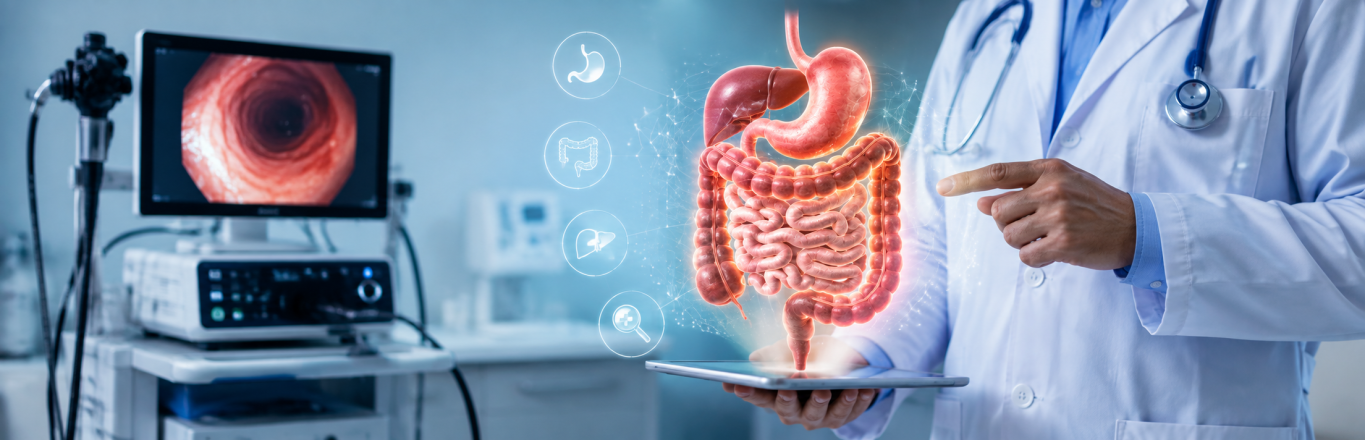
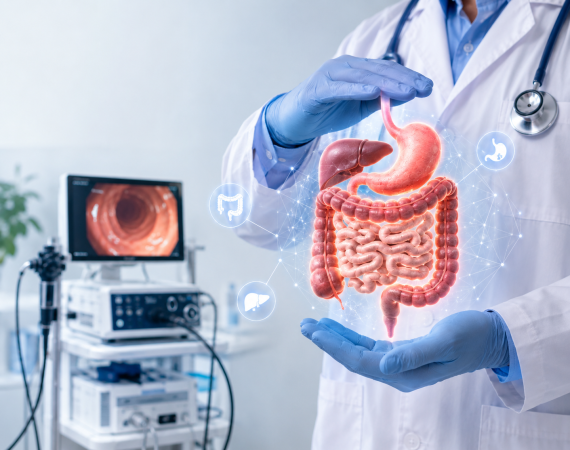
Saada Hospital’s Gastroenterology Department in Sohar provides comprehensive care for patients with a wide range of digestive system conditions. Our experienced gastro specialists focus on the accurate diagnosis, treatment, and management of conditions affecting the esophagus, stomach, intestines, colon, liver, pancreas, and gallbladder.
We are committed to providing personalized and compassionate care at our endoscopy center, supported by advanced diagnostic and therapeutic endoscopy services to help patients maintain better digestive health and quality of life.
Our gastroenterology team provides evaluation and treatment for a variety of digestive and gastrointestinal conditions, including:
The right gastroenterologist depends on your symptoms. At Saada Hospital in Sohar, our gastro specialist covers the full range of digestive conditions — acid reflux and GERD, gastritis and ulcers, IBS and inflammatory bowel disease, liver, gallbladder and pancreatic conditions — and performs both diagnostic and therapeutic endoscopy and colonoscopy on site. If you are unsure whether your symptoms need a specialist, call us and we will advise.
Preparation usually starts the day before. You will be asked to stop eating solid food and drink only clear fluids, then take a prescribed bowel-cleansing preparation in the evening and sometimes again early on the morning of the procedure. You may also need to pause certain medicines, particularly blood thinners and iron tablets. Our endoscopy team gives you written instructions when you book — follow those exactly, as a poor prep can mean repeating the test.
For an upper GI endoscopy (gastroscopy) you will normally be asked not to eat for around six hours before the procedure and not to drink for about two hours before it, so the stomach is empty and the view is clear. Tell us in advance about any medicines you take, especially blood thinners and diabetes medication. The test itself usually takes only a few minutes, and you will need someone to drive you home if sedation is used.
Both use a thin, flexible camera, but they look at different parts of the digestive system. An upper GI endoscopy goes through the mouth to examine the food pipe, stomach and the first part of the small intestine — useful for reflux, ulcers and difficulty swallowing. A colonoscopy goes through the back passage to examine the large bowel, and is used for bowel symptoms, bleeding and colorectal screening.
See a gastroenterologist if you have persistent heartburn or acid reflux that does not settle with over-the-counter treatment, difficulty or pain when swallowing, ongoing stomach pain, a lasting change in bowel habit, unexplained weight loss, or blood in your stool. Any bleeding, black stools or unexplained weight loss should be assessed promptly rather than watched.
International guidance recommends that people at average risk begin colorectal cancer screening at age 45, and continue at regular intervals depending on the test used and what it finds. If you have a family history of bowel cancer, inflammatory bowel disease, or symptoms such as bleeding or a change in bowel habit, screening may be recommended earlier. Speak to our gastro specialist about the right schedule for you.